Understanding the Impact of Jueteng in the Philippines
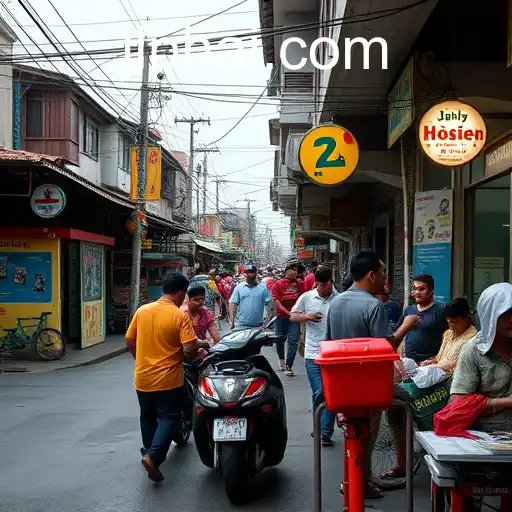
In the vibrant and bustling streets of the Philippines, amidst the colorful jeepneys and crowded markets, there exists a phenomenon that many locals are well aware of but dare not speak too loudly about—Jueteng. Represented by the code JLPH, Jueteng is an illegal numbers game deeply entrenched in the country’s social and economic landscape. Its existence has sparked numerous debates and controversies among citizens, government officials, and even the international community.
The Origins of Jueteng
Jueteng is believed to have originated from China, later spreading throughout Southeast Asia and being firmly rooted in the Philippines. Its arrival in the country dates back to the Spanish colonial era, evolving over time into the form it takes today. Despite numerous attempts to curtail its operation, Jueteng has persisted and adapted, becoming an integral part of the Filipino subculture.
How Jueteng Operates
The mechanics of Jueteng are deceptively simple yet strategically intricate. Participants choose a pair of numbers, each ranging from 1 to 37, and place their bets with a trusted local collector known as the “cobrador.” These collectors gather entries from bettors and forward them to the bookies or the “kubrador.” The numbers are drawn, and winners are determined based on the chosen combinations matching the outcome.
The Socio-Economic Influence
Jueteng has a profound societal impact, providing a sense of hope and immediate financial relief for many. In economically challenged communities, it is often seen as a form of escapism or a quick means to supplement meager incomes. Despite its illegality, the game enjoys widespread patronage, partly due to the allure of escape from poverty and financial hardship.
Political Entanglements
Jueteng's presence in the Philippines often intersects with the political sphere. Local and national politicians sometimes exploit the operations of Jueteng to amass political capital and financial resources. Accusations of officials being on the payroll of Jueteng operators have stained the integrity of government institutions, complicating efforts to enforce anti-gambling laws effectively.
Efforts to Combat Jueteng
Successive administrations in the Philippines have pledged to eradicate Jueteng, implementing various strategies to halt its proliferation. However, enforcement has been inconsistent, hindered by corruption within the ranks of law enforcement and the lack of political will. Some propose the legalization and regulation of Jueteng as a viable solution to ensure government control and decreased corruption.
Legalization as a Solution?
Proponents of legalization argue that bringing Jueteng into the mainstream economy offers a pragmatic approach. Legalizing it would enable the government to collect taxes, provide more secure employment for individuals involved, and channel funds to public services such as health and education. Nonetheless, critics contend that legalization may inadvertently legitimize gambling culture, exacerbating addiction problems and perpetuating financial instability among vulnerable populations.
Jueteng's Cultural Perception
Opinions on Jueteng vary widely across different societal segments. For some, it is a cultural mainstay—part and parcel of the Filipino experience akin to fiestas and “sabong” (cockfighting). To others, it is a scourge that deepens the issues of corruption and crime. These differing perceptions highlight the complex role Jueteng occupies within Filipino society.
The Role of Media and Public Discourse
The media plays an influential role in shaping public discourse on Jueteng. Coverage ranges from investigative journalism that exposes the dealings of influential figures, to community-led discussions about its social implications. Media scrutiny often reignites public interest and debate, serving as a catalyst for reform and action.
Conclusion
Jueteng stands as a major societal and economic force in the Philippines, challenging authorities and communities to address its multifaceted influences. Whether viewed as a necessary evil, a symptom of deeper systemic issues, or a candidate for regulation and control, Jueteng continues to shape the socio-political fabric of the Philippines. Understanding its complexities through an objective lens is vital for crafting policies that resonate with the realities faced by Filipinos.